A valuable tool for creating safer schools is providing opportunities for students to learn to communicate openly and respectfully with one another, according to retired Superintendent Stan Bippus.
July 20, 2026
 XENIA/STOCK.ADOBE.COM
If there is one question in public education that you can get everyone to agree upon, it is, "Are we doing everything we can to keep our schools safe?" I have never met an educator or parent who is not concerned about ensuring that all students are safe at school.
The Columbine High School shooting in 1999 was a major turning point in efforts to keep public schools safer. Major changes in school safety were implemented, including lockdown drills and keeping all exterior doors locked, except for the main entrance. Most schools, especially secondary schools, have safety officers, and some have even installed door barricade devices. There also is a significant increase in the number of inside and outside surveillance devices. Some schools even allow teachers with a gun permit and some training to carry a weapon in school.
The number of social and emotional programs to help students dealing with these special needs has increased significantly. It is estimated that 15% of students have some learning disability and need special assistance. More and more schools are implementing programs to help students with special needs.
Every school district will have students who do poorly in school, experience violence at home, lack friends, face negative peer influence, struggle with mental health issues, and have access to weapons. All of these conditions can lead students to exhibit inappropriate behavior, including endangering themselves and others.
Educators and parents struggle with how to protect children who are being picked on, pushed around, and even assaulted at school. Having spent 35 years in public education, I was continually frustrated at the number of educators and even parents, when confronted with the report that their child or student was disrespectful or bullying a fellow student, responded by saying such things as, "Boys being boys," or "Being bullied is simply a rite of passage they must learn to deal with growing up."
However, the most frustrating excuse of all was, "Oh, they were just teasing."
It's common knowledge that people who mistreat or bully others actually suffer from a negative self-concept or a need to control others. Many bullies also suffer from being bullied in their home environment or may just plain lack empathy. There also is peer pressure on students who witness a fellow student being mistreated or bullied not to "squeal" on a bully, out of fear of being labeled a "tattletale” or a “snitch."
One of the major causes of inappropriate behavior in public schools is the lack of dialogue between students, between teachers and students, and between kids and their parents. Too many kids don't have anyone to talk to. Research clearly shows that schools that created trusted relationships between students and staff had fewer discipline problems because students knew whom they could and could not trust to report inappropriate behavior.
Given these challenging situations, the question remains: "What should we be doing to try to keep our schools safer?" Needless to say, there is no one answer to this question, but we need to keep trying.
With that in mind, I would like to offer some suggestions to ensure that every student in a school district is more comfortable talking with students from different social and economic backgrounds, which I believe will lead to safer schools. I recommend the following ideas, recognizing that it is very challenging to get students from different groups to talk to one another. Some students are shy or have conditions such as ADHD or dyslexia, which may make it challenging to get them to participate in group discussions.
It also is very common for educators to resist taking time out of the school day for open-ended discussion groups, as that time is taken away from teaching the required curriculum. Surprisingly, many teachers will not support being required or asked to facilitate group discussions with students, as they were not trained to be counselors and become very frustrated when they are unable to get students to talk to one another.
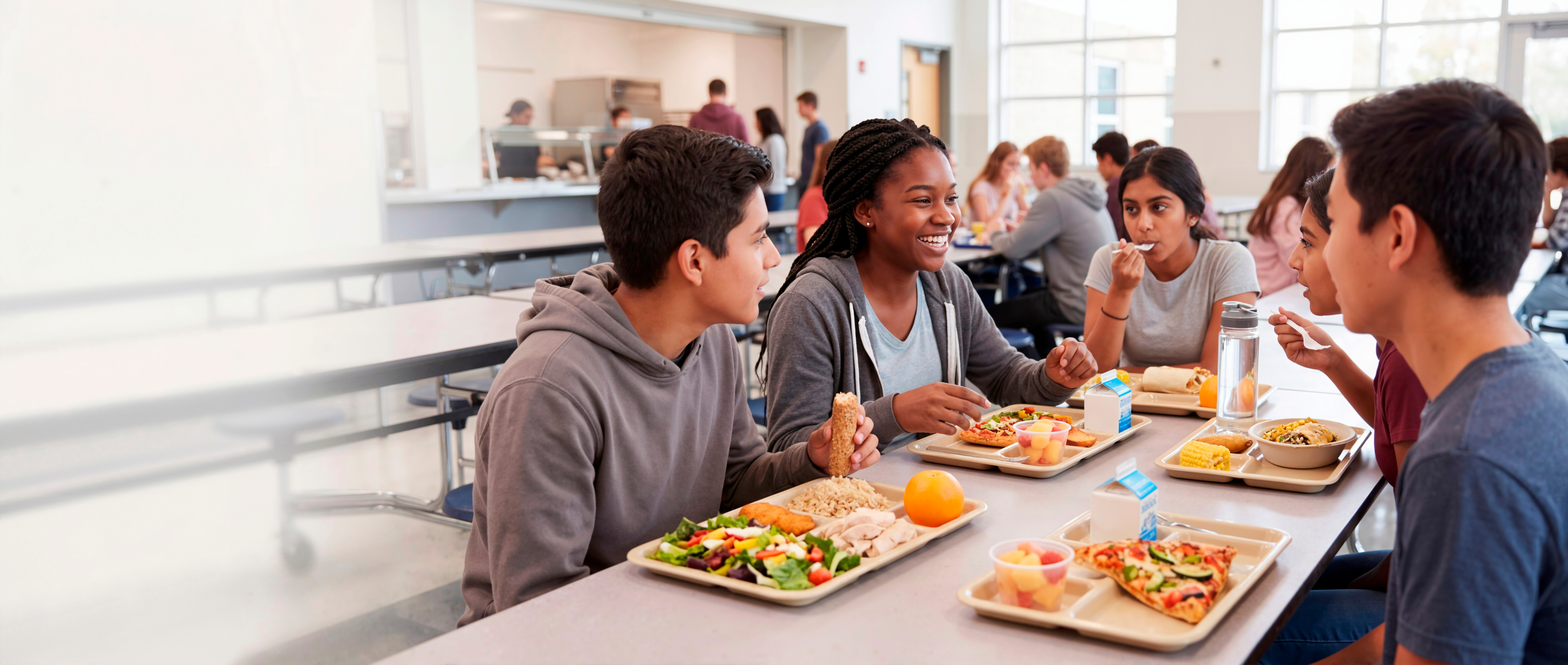
One suggestion is to have students eat lunch several times a year with students they may not know or who are not in their social group. This can be accomplished by placing numbers on every table in the cafeteria. When students enter the lunchroom, they draw a number from a "hat," and that's the table they are to sit at for lunch. At each table, there would be a suggested list of discussion questions. Ideally, each table would have an adult volunteer or school employee present to start discussions and ensure order. However, creative ways can be used to select a specific student to serve as the acting chairperson and present various questions to the students at the table.
A more controlled approach is to have every student in the school district become a member of a team of seven or eight students from diverse backgrounds. Counselors and administrators would be responsible for assigning students to teams to make certain that each team included students from diverse backgrounds. Counselors and administrators would be responsible for training all school employees to facilitate group discussions. Teams would meet four or five times a year for about 45 minutes to help students get to know one another and talk. Possible discussion topics would be provided by various staff members and by students.
To improve communication among parents, other caregivers, and young people, one option is for the school district to stop assigning academic homework on Wednesdays. Wednesday evening is recommended because many churches in communities have established Wednesday night for a variety of activities, and the middle of the week is a good time to give students a break from traditional homework. Instead, students from different grade levels would be given two questions to discuss with their parents. The questions could be developed by educators and community members and approved by the administration or counselors. Several commercial companies, such as Tales, Talking Points, Big Life Journal, and Deep Talk Cards, also offer hundreds of discussion topics. Social organizations like the YMCA, Boys & Girls Clubs, and the Salvation Army, along with churches, can post the weekly discussion topics on their sites.
The weekly homework questions also will help build better communication among all people. They can turn a community eager to build better communication into a community of stronger families united in a common cause.
Will some parents not discuss the weekly questions? Absolutely. However, everyone in the community will be aware that weekly questions are posted, which will place some peer pressure on everyone to become involved.
Safer schools will result from efforts that focus on getting young people to talk eye to eye with each other, respectfully and honestly. Everyone needs someone in their life whom they can trust and feel comfortable sharing their feelings with. Helping young people develop open, honest, and respectful communication skills is as important as any academic skill taught in schools, except for reading.
Stan Bippus (slbippus@outlook.com) is a retired school superintendent now residing in Indiana.